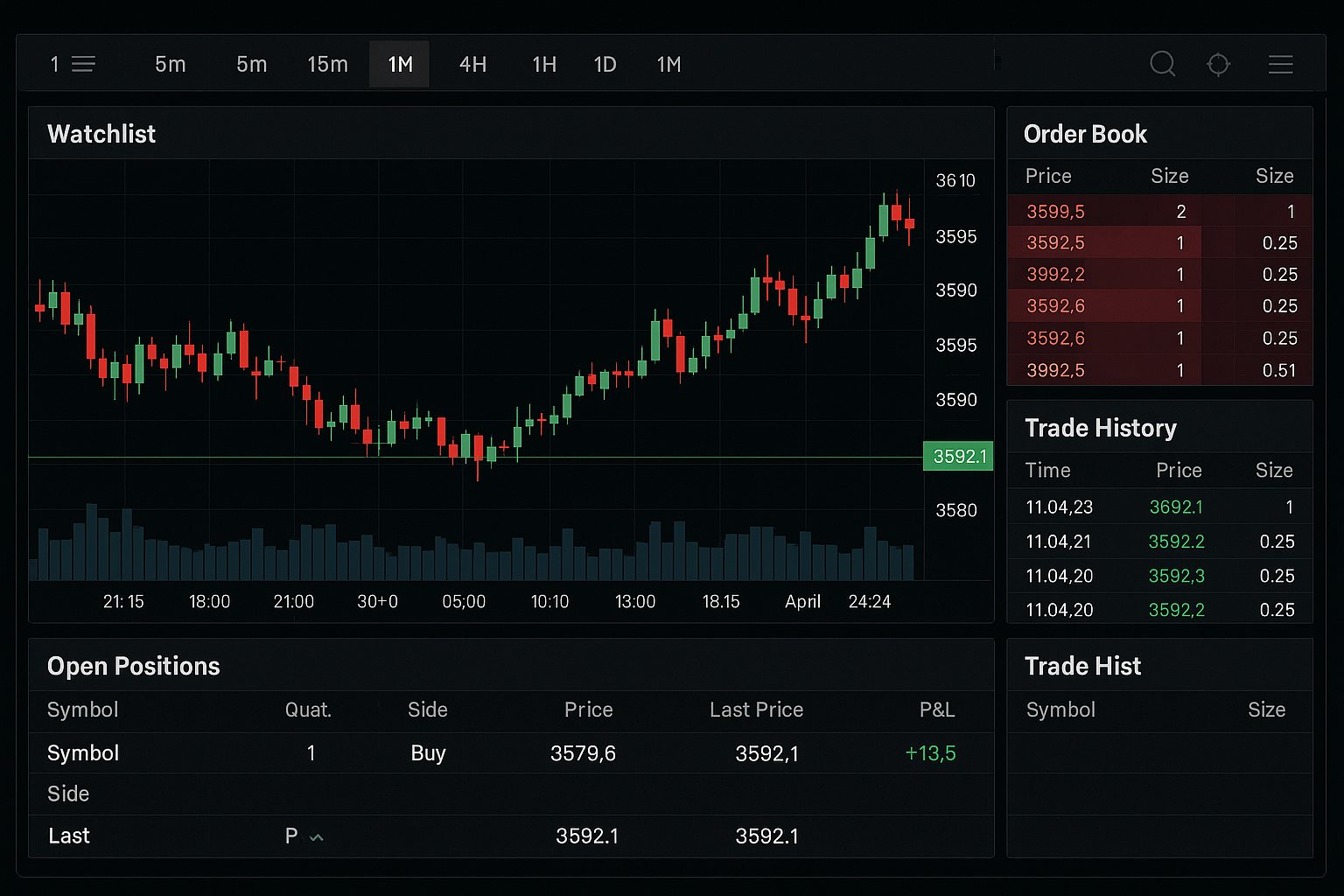
In 2026, artificial intelligence has become the defining technology for businesses seeking to stay ahead of the competition. Whether you're managing investments, running a school, or inspecting infrastructure at scale, Alpha AI solutions offer a unified approach to automation, decision-making, and growth. The platforms built around Alpha AI aren't just about processing data faster—they're about giving you back time, reducing guesswork, and letting intelligent systems work for you while you focus on what truly matters.
This guide walks you through how Alpha AI transforms operations across industries, how to compare solutions that claim to lead the market, and exactly how to choose the right tool for your needs. By the end, you'll understand why thousands of investors, educators, and facility managers have already made the switch.
| Alpha AI Solution | Best For | Key Benefit | Setup Time |
|---|---|---|---|
| Investment Management | Portfolio optimization & automated trading | Adapts daily, reduces manual decisions | Minutes |
| Education Platforms | Personalized learning & skill tracking | 2-hour school days, top 1% results | Hours |
| Infrastructure Inspection | Building & drone-based site monitoring | Faster defect detection, detailed 3D reports | Days |
| Consulting & Custom AI | Enterprise workflows & automation | Tailored solutions, full integration | Weeks |
Alpha AI removes the friction from complex tasks: investment strategies that adapt daily, classrooms that teach smarter not longer, and inspections completed in hours instead of weeks. The real advantage isn't the technology itself—it's the time and clarity it returns to you.
What is Alpha AI and How Does it Transform Business Operations?
Core Applications of Alpha AI Technology
Alpha AI functions as a decision-making layer that sits above your existing systems. Instead of forcing you to hire more analysts, build custom software, or train your team on new tools, Alpha AI learns your goals and automates what comes next. At its core, it processes vast amounts of data in real-time, identifies patterns you'd miss manually, and executes actions with precision.
In investment management, this means your portfolio rebalances itself as market conditions shift—no human second-guessing required. In education, it means every student receives lessons calibrated to their exact level of understanding. In infrastructure, it means drones equipped with AI vision scan buildings for defects faster than any human inspector team could cover in days.
The beauty of Alpha AI is that it works across these domains with the same underlying principle: collect data, learn what matters, act with consistency. You get the same reliability and logic regardless of whether you're managing millions in assets or monitoring a commercial property.
Key Differences Between Alpha AI Platforms and Traditional Software
Traditional software forces you to tell it exactly what to do. You input rules, it follows them. If the world changes, you reprogram it. This works for simple, repetitive tasks, but it falls apart when variables multiply or conditions shift unexpectedly.
Alpha AI platforms, by contrast, learn and adapt. They don't wait for you to reprogram them when market volatility spikes or classroom demographics change. They're built to ingest new information daily and recalibrate automatically. This means you're not maintaining software—you're managing an intelligent partner that improves over time.
Another critical difference: traditional software asks you to become an expert at using it. Alpha AI platforms are designed with the opposite philosophy. They translate complexity into simplicity. You describe your goal (grow my wealth while sleeping, accelerate my child's learning, inspect my buildings faster), and the platform handles the technical machinery.
Which Industries Benefit Most from Alpha AI Solutions?
Alpha AI in Investment Management and Portfolio Optimization
If you've ever felt trapped between three bad choices—leave your money on the sidelines, spend hours analyzing markets daily, or pay high fees for professional management—Alpha AI breaks that trap.
Investment platforms powered by Alpha AI run quantitative strategies that were once only available to large hedge funds. They track hundreds of market signals daily, reweight your holdings as trends emerge or fade, and maintain discipline when fear or greed might push you toward poor decisions. A real-world example: when market conditions turn volatile, an AI-powered portfolio automatically reduces risk exposure. When trends strengthen, it increases positioning. You don't have to remember to do this yourself.
The setup takes minutes. You describe your financial goals, your risk tolerance, and your investment horizon. The platform builds a portfolio, funds it, and from that moment forward, it's actively managed on your behalf. Most people report spending far less time thinking about money while watching their portfolios perform as well as or better than they managed them manually.
Alpha AI in Education and Personalized Learning
Imagine a school day where every student learns at their own pace, masters concepts before moving forward, and finishes their academics in two hours instead of six. That's not science fiction in 2026—it's happening now with AI-powered education platforms.
Alpha AI in schools works by continuously monitoring each student's understanding. When a learner struggles with a concept, the AI shifts to different explanations or examples. When they grasp material quickly, it accelerates. Every session adapts in real-time, which means no student spends time bored or confused. The result isn't just faster learning—it's better learning. Graduates of these programs consistently rank in the top 1% nationally on standardized measures.
The remaining school day shifts to what AI can't automate: life skills development, mentorship, creative projects, and the human relationships that actually make school something kids look forward to. Parents report their children become more motivated and confident, not more anxious about academics.
Alpha AI in Infrastructure Inspection and Building Management
Traditional building inspections mean sending teams to-site, climbing equipment, taking photos, and compiling reports over days or weeks. AI-powered inspection platforms compress this dramatically.
In 2026, autonomous drones equipped with AI vision fly over or through buildings, capturing high-resolution imagery and thermal data simultaneously. The AI analyzes this data on the fly, identifying structural defects, pointing out maintenance needs, and generating detailed 3D models of what it found. A project that once took a team of three inspectors two weeks now takes a system a few hours.
The gains ripple across property management: maintenance budgets become predictable, risks surface before they become crises, and reports become actionable rather than informational. One facility manager noted that her team now catches roofing deterioration and HVAC problems before they cause costly downtime—and they do it with 80% less on-site time required.
How Does Alpha AI Technology Work Behind the Scenes?
Machine Learning Models and Algorithms Powering Alpha AI
At the foundation, Alpha AI platforms run machine learning models trained on historical data. For investment systems, this means years of price movements, economic indicators, and market regimes. For education platforms, this means millions of student interactions and learning outcomes. For inspection systems, this means thousands of images of defects, structural failures, and normal wear patterns.
These models learn what patterns precede different outcomes. In investing, they learn that certain combinations of market signals tend to precede uptrends or downturns. In education, they learn which teaching methods work for which learning styles. In inspection, they learn to spot defects that escape human eyes or that only appear in specific conditions.
The algorithms continuously validate themselves against live data. If a model's predictions start drifting from reality, the system retrains automatically or alerts you to recalibrate. This self-correcting behavior is what separates Alpha AI from static software.
Real-Time Data Processing and Autonomous Decision-Making
Most software analyzes data after-the-fact. You run a report, review it, decide what to do, then implement. By the time you've finished, conditions may have changed.
Alpha AI operates in real-time. Investment platforms process market data every trading second. If conditions shift, the system rebalances immediately. Education platforms track student progress with every quiz or exercise, adjusting lesson difficulty within the same session. Inspection drones send processed data to the cloud as they fly, generating reports while the hardware is still in motion.
This real-time processing means decisions happen with zero latency. You're not making choices in the past—you're acting on what's true today. For investors, this difference compounds over time. For educators, it means every classroom hour targets each child's actual current ability. For facility managers, it means problems are flagged before they escalate.
Integration Capabilities and API Infrastructure
A powerful AI system that can't talk to your existing tools becomes a silo. That's why enterprise Alpha AI platforms include robust APIs that connect to your accounting software, portfolio management systems, student databases, or facility management tools.
Integration typically works one of three ways. First, pre-built connectors for common platforms (like integration with major brokerages or school administration systems). Second, standardized APIs that developers can use to build custom connections. Third, webhook automation that triggers actions in other systems when Alpha AI detects something significant.
A real example: your Alpha AI investment platform detects a sudden market shift and rebalances. Simultaneously, it sends that rebalancing data to your accounting system, which updates your profit-and-loss statement and notifies your auditor. No manual data transfer, no email chains, no errors from copy-pasting numbers.
Alpha AI vs. Competitors: What Sets Market Leaders Apart?
Pricing Models and Cost Efficiency
When comparing Alpha AI platforms, cost structure matters as much as features. Most fall into one of three models, and understanding which applies to your situation saves money and headaches.
Subscription-based pricing charges a monthly or annual fee regardless of how much you use the system. This model works best if you have steady, predictable usage. Investment management platforms often use this model, with fees ranging from under 0.5% for smaller accounts to flat rates for larger ones. It's transparent and aligns the provider's success with yours—if the platform underperforms, you're paying the same fee anyway, so they're motivated to improve.
Per-transaction or usage-based pricing charges you only for what you consume. This appeals to businesses with variable needs—maybe some months you inspect five buildings, others you inspect fifteen. You pay proportionally. The trade-off is less budget predictability.
Value-share pricing, less common but increasingly popular, lets the platform take a percentage of gains or savings it delivers. An investment manager might take 20% of outperformance above a benchmark. An inspection service might charge per defect identified. This aligns incentives perfectly—they earn more only when you win. The downside is higher costs if the system performs exceptionally well, though in those scenarios you're earning enough that high fees feel acceptable.
Market leaders distinguish themselves by transparency about these costs. There are no hidden fees, no surprise bills, no fine print that changes when you scale up. You know exactly what you're paying and why.
Security, Compliance, and Data Protection
Your data is your most valuable asset, so the platform storing and processing it must protect it like that.
Leading Alpha AI platforms use enterprise-grade encryption both in transit and at rest. This means data traveling between your device and the platform's servers is scrambled, and data stored in their databases is encrypted even when sitting idle. If someone physically stole a server, the data would be useless to them.
Compliance standards vary by industry, so platforms designed for specific sectors meet those requirements. Investment platforms are built to SEC standards and often maintain SOC 2 Type II certification, which means independent auditors regularly verify their security practices. Education platforms comply with FERPA and COPPA, protecting student privacy. Infrastructure inspection systems handle non-sensitive data, so compliance demands are lighter.
The transparency here matters tremendously. Trustworthy platforms publish their security documentation, explain their audit status, and answer technical questions about their data handling practices. They don't hide behind vague language like "we take security seriously." They demonstrate it.
Performance Metrics and Proven Results
Claims of excellence mean nothing without numbers backing them up. Leading platforms publish their track record clearly.
In investing, this means historical performance data. Real platforms show you returns across different market conditions, compare themselves to benchmarks, and explain when they underperformed along with why. They don't cherry-pick the best years or hide down periods. An honest platform that was down 15% in a bear market but beat the benchmark by 5% will say so explicitly.
In education, it's test scores and learning velocity. The best platforms show that their students complete material faster without sacrificing understanding, often ranking in the top percentiles on standardized measures. They also track student satisfaction and motivation, knowing that engagement is as important as academics.
In infrastructure, it's defect detection accuracy, false positive rates, and project timeline compression. A platform that identifies 95% of actual defects but generates false alarms constantly is actually worse than useful. The best ones optimize for both precision and recall.
When comparing platforms, ask for these numbers. Don't accept "we're the best in the industry." Insist on specifics, benchmarks, and third-party validation where available.
How to Choose and Implement the Right Alpha AI Solution for Your Needs?
Assessing Your Business Requirements and Use Cases
Before you even look at platforms, know what you're trying to solve. This sounds obvious, but many people jump to AI implementations before clarifying their actual pain point.
Ask yourself concrete questions. In investing, are you trying to save time managing your portfolio, reduce emotional decision-making, outperform a specific benchmark, or all three? Your answer determines which platform to evaluate. A platform optimized for "set and forget simplicity" might underperform a platform built for sophisticated traders, even if both beat the market. Choose the one aligned with your actual goal.
In education, is your pain point teacher shortage, learning velocity, student engagement, or family scheduling? These point to different solutions. A 2-hour AI learning model solves the scheduling and velocity problem beautifully but doesn't add more teachers. A district with healthy staffing but engagement challenges needs a different tool.
In infrastructure, are you trying to reduce inspection time, improve safety, increase maintenance predictability, or prove compliance to regulators? Again, this guides your choice.
Next, inventory your existing systems. What software do you already use? Does the Alpha AI platform need to integrate with it? Can it handle your data volume? Is your data clean and structured, or does it need preprocessing? These practical details often decide whether an implementation succeeds or stalls.
Finally, be honest about your team's readiness. Do you have someone who can manage the platform day-to-day? Will your staff accept an AI system, or do they see it as threatening? These human factors matter as much as technology factors.
Deployment Options: Cloud, Local, or Hybrid Implementations
Not every Alpha AI solution lives in the cloud. Leading platforms offer deployment flexibility because different organizations have different constraints.
Cloud deployment means the platform runs on the provider's servers. You access it through a web browser or app. This is the simplest to start with—no installation, minimal IT overhead, automatic updates, and you pay a subscription. The trade-offs are data residency concerns in regulated industries and dependency on internet connectivity. If your connection drops, you can't access critical functionality. Most investment and education platforms use cloud deployment because the speed and simplicity benefits outweigh concerns.
Local deployment means the Alpha AI system runs on your servers, in your data center, on your network. You maintain full control over data, comply with data residency regulations easily, and don't depend on internet availability. The trade-offs are higher upfront costs, IT requirements to manage the system, and responsibility for backups and security. Some enterprise customers, especially in heavily regulated industries, choose local deployment for these reasons.
Hybrid deployment is increasingly common. Your sensitive data or decision logic runs locally, but the machine learning model and processing power live in the cloud. Real data gets processed locally for compliance, then anonymized or aggregated data trains models in the cloud. This balances security and simplicity, though it's more complex to set up than pure cloud.
When choosing, consider your data sensitivity, regulatory environment, IT team size, and preference for control versus convenience. Reputable platforms support multiple options or can recommend what works best for your situation.
Getting Started: From Evaluation to Full Integration
The best Alpha AI platforms make the first step incredibly easy. You should be able to try the system with minimal commitment.
For investment platforms, this typically means opening an account, funding it with a small amount (sometimes as little as a few hundred dollars), and watching the AI manage your money in real-time. You see results immediately. If you like what you see after 30 days, you fund more. If not, you withdraw your money and walk away.
For education platforms, it usually means booking a campus visit or demo. You see classrooms in action, talk to teachers and students, understand the 2-hour learning model firsthand. Then your child joins for a trial semester with a clear exit point if it's not the right fit.
For infrastructure platforms, it means scheduling a pilot inspection. The vendor inspects one building using their AI system, delivers a report, and you compare results to your previous inspection approach. This concrete comparison makes the value apparent.
Once you decide to commit, implementation timelines vary. Investment platforms activate in minutes. Education placements take a semester to see real benefits. Infrastructure systems scale gradually—you pilot one building, then expand to your full portfolio.
Throughout implementation, you'll have a dedicated contact at the platform provider. That person answers questions, troubleshoots issues, and accelerates your onboarding. This relationship often determines whether your implementation succeeds or stalls. The best platforms assign real people to this role, not bots or generic support queues.
After you're live, most platforms offer ongoing training and optimization. They analyze how you're using the system, suggest settings tweaks, and share best practices from other similar users. This continuous improvement is what separates platforms that improve over time from ones that plateau after initial setup.
Conclusion
Alpha AI isn't a luxury technology reserved for large enterprises or sophisticated investors anymore. In 2026, it's a practical tool that saves time, removes guesswork, and delivers concrete results across investing, education, and infrastructure management. Whether you're trying to grow wealth with less stress, educate children more effectively, or inspect buildings faster and more accurately, an Alpha AI solution exists for your situation.
The key to success isn't choosing the most advanced platform or the cheapest one. It's choosing the platform that aligns with your specific goals, integrates smoothly with your existing world, and has a track record of delivering the outcomes that matter to you. Start with a clear assessment of what you need to solve, evaluate options with realistic expectations about what AI can and can't automate, and take the first step with a low-risk trial.
The platforms that succeed are those that treat Alpha AI as a partner, not a replacement. You're not eliminating human judgment or expertise—you're multiplying it by automating routine decisions, freeing your time and attention for what truly requires human wisdom. That's the actual power of Alpha AI in 2026, and that's why thousands of investors, educators, and facility managers are already using it today.