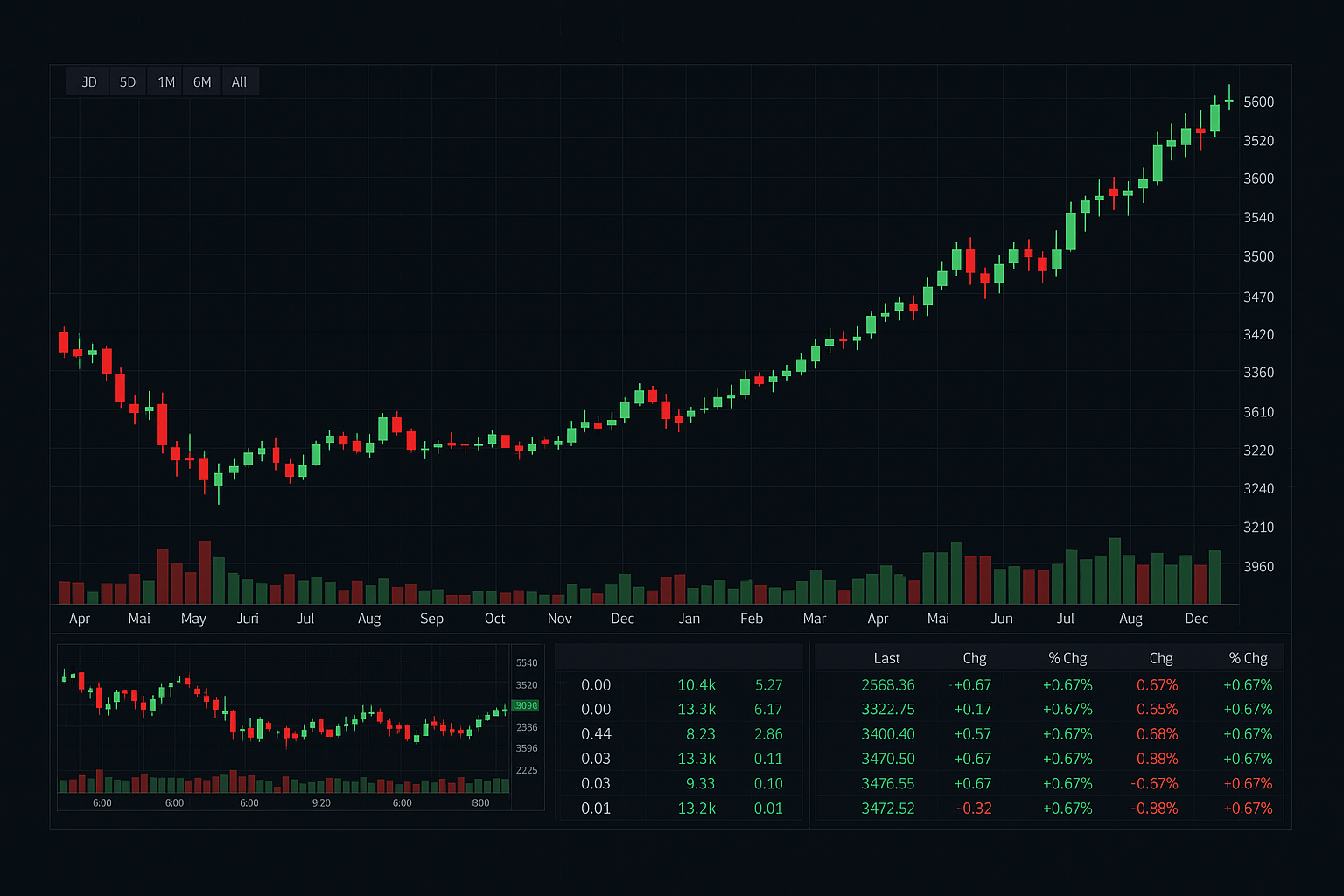
In 2026, the trading landscape has shifted dramatically. Artificial intelligence now sits at the heart of how millions of traders discover opportunities, execute trades, and manage risk. Yet not all AI trading signals are created equal. The gap between genuine, data-driven systems and overhyped marketing schemes has never been wider. This guide cuts through the noise and shows you exactly what separates reliable AI signals from empty promises, how to spot red flags before they cost you money, and which platforms are worth your attention right now.
Whether you're new to trading or looking to upgrade your current toolkit, understanding AI signals has become as fundamental as knowing how to read a chart. The good news: you don't need a PhD in machine learning to recognize quality. You just need to know what to look for, what questions to ask, and how to test before you commit real capital.
| Signal Type | How It Works | Speed | Best For |
|---|---|---|---|
| AI Algorithmic | Machine learning analyzes historical data and market patterns | Real-time | Active traders, scalpers |
| Neural Networks | Deep learning identifies complex patterns humans miss | Real-time | Trend traders, swing traders |
| NLP Sentiment | AI reads news, social media, earnings calls for market mood | Minutes | Fundamental traders, event-based |
| Hybrid Models | AI signals combined with human trader confirmation | Variable | Conservative traders, risk-aware |
Key Takeaways to Remember
- Real AI signals always include a stop loss. No exceptions.
- Proven track records come with verifiable data, not testimonials.
- The fastest signals don't automatically win. Accuracy matters more than speed.
- Your job is to test, backtest, and measure before risking real money.
What Are AI Trading Signals and How Do They Work?
An AI trading signal is a recommendation to buy or sell an asset at a specific price, generated by machine learning models instead of human analysts. Unlike traditional signals that rely on a trader's intuition or manual chart reading, AI signals process thousands of data points per second across multiple timeframes and markets simultaneously.
The core difference comes down to volume and speed. A human trader might scan ten assets and identify a breakout. An AI system scans ten thousand assets across dozens of markets in seconds, flagging every opportunity that meets its programmed criteria. But volume means nothing without accuracy. A quality AI model doesn't just spot movement. It predicts direction with measurable confidence based on patterns learned from years of historical data.
Machine Learning vs Traditional Indicator-Based Signals
Traditional indicator-based signals use fixed formulas. If the RSI crosses above 30, you get a buy signal. If the MACD lines cross, another signal triggers. These rules work until they don't. Markets shift. Volatility spikes. A setup that worked in 2024 might fail in 2026 because market conditions have evolved. Traders using only static indicators often find themselves whipsawed, entering at the wrong time and exiting too early.
Machine learning changes this dynamic. Instead of applying the same rules forever, AI models adapt. They learn from new data every day. When market behavior shifts, the model recalibrates. It recognizes that a breakout pattern looks different in high volatility versus low volatility, that news impact varies by asset class, that seasonal patterns matter. The model trains itself to recognize these subtleties without waiting for a human to manually reprogram it. This adaptive quality is why AI-powered signals often outperform static indicator setups over longer time horizons.
How AI Algorithms Identify Trading Opportunities in Real Time
Here's how the process works in practice. The AI system ingests real-time price data, volume, order book depth, and sometimes external data like news feeds or economic calendars. It runs this data through trained neural networks that have learned patterns from millions of historical price movements. The model outputs a probability score. "There's a 72% chance this asset will move up 2% in the next four hours based on the pattern I'm seeing right now."
The quality of that prediction depends entirely on how well the model was trained. Poor training data creates poor signals. Good training data, tested across different market environments, creates signals worth following. This is why transparency matters. You want to know: What data did they train on? How far back does it go? Did they test on data the model had never seen before? A provider unwilling to answer these questions is signaling that their answer probably won't impress you.
The 4 Types of AI Trading Signals You Need to Know
AI-Powered Algorithmic Signals
Pure algorithmic signals run entirely on code. No human touches the decision. The AI analyzes price action, volume, volatility, and historical patterns, then automatically generates a signal with entry, exit, and stop-loss levels. These systems excel at speed and consistency. They don't get emotional. They don't second-guess themselves at 3 AM. They execute exactly as programmed.
The downside: they're inflexible. If market conditions shift dramatically (like a sudden geopolitical event), an algorithmic system keeps firing signals based on yesterday's patterns. The best algorithmic platforms include circuit breakers and risk controls that shut down signals during extreme market stress. When choosing an algorithmic system, ask specifically about their safeguards. How do they handle black swan events? Do they pause trading in high-volatility periods? Can you manually override a signal if you see a red flag?
Neural Network Pattern Recognition
Neural networks are a step up in complexity. Instead of following hard-coded rules, these AI models learn by example. Show a neural network thousands of chart patterns and their outcomes, and it learns to recognize which patterns preceded price increases and which preceded crashes. It doesn't follow a formula. It recognizes gestalt patterns the way a human trader's brain recognizes a face in a crowd.
This approach catches nuances that algorithmic systems miss. A neural network can detect that a head-and-shoulders pattern looks slightly different in a low-liquidity market versus a high-liquidity one, and adjust its confidence score accordingly. Over time, as it sees more market behavior, it gets smarter. Many of the best-performing platforms in 2026 use neural networks as their core engine. The trade-off: they're harder to understand. You can't always explain why the model generated a specific signal. It saw something in the data, but articulating exactly what is challenging.
Natural Language Processing for Market Sentiment
Natural language processing, or NLP, teaches AI to read and interpret human language. An NLP system scans financial news, earnings call transcripts, social media, and analyst reports, extracting sentiment. Is the overall market mood bullish or bearish? Is a specific company facing positive or negative sentiment? This happens in real time, pulling from sources the moment they publish.
NLP signals shine when markets react to news. Central bank announcements, earnings surprises, geopolitical developments, these events create trading opportunities within minutes. An NLP system can detect a shift in sentiment across dozens of sources simultaneously and flag it as a trading setup before most traders even see the headline. The limitation: sentiment alone doesn't predict price. A stock can have negative sentiment but still rise because its valuation is compelling. The best platforms combine NLP with price-based AI for a fuller picture.
Hybrid Signals: AI Combined with Manual Analysis
Hybrid signals blend AI recommendations with human trader input. The AI generates a signal. A human trader reviews it, adds context, confirms or adjusts the entry and exit levels, and only then publishes the signal to subscribers. This approach preserves the strengths of both worlds. The AI catches opportunities humans might miss. The human adds judgment and filters out false signals the AI might generate during choppy, uncertain markets.
Hybrid systems are slower than pure AI, but often more accurate. They work well for longer timeframe trading (daily, weekly) where the extra few hours of human review don't matter, and where human judgment about market regime and risk tolerance adds real value. If you prefer having a real person able to explain the reasoning behind each signal, hybrid systems are your sweet spot.
AI Signals vs Manual Signals: Which Actually Performs Better?
Win Rates and Backtesting: What the Data Really Shows
Here's where claims often diverge from reality. You'll see marketing claiming AI signals hit 85%, 90%, even 95% accuracy. Walk away from these claims. Real-world AI systems in 2026 achieve win rates between 52% and 65% under normal market conditions. That might sound modest, but remember: if your risk-reward ratio is 1:2 (you risk $100 to make $200), a 55% win rate is genuinely profitable over time. The industry's obsession with win rate comes from amateur traders who don't understand that percentage of winning trades means far less than the ratio of average win to average loss.
When evaluating backtest results, insist on out-of-sample testing. This means the AI was trained on data from 2020-2024, then tested on data from 2025 onwards that it had never seen. In-sample testing (training and testing on the same data) always looks better than real performance. It's mathematical. Out-of-sample results are the only honest measure. Ask providers: "Show me your out-of-sample performance across at least two separate market regimes." If they hesitate or show only cherry-picked results, their backtests are probably misleading.
Speed and Accuracy: Where AI Gets the Edge
AI wins decisively on speed. A human trader can analyze a chart in maybe 30 seconds. By the time they've moved to the next chart, an AI system has already analyzed thirty more assets. In fast-moving markets, this speed advantage compounds. An AI system can catch a breakout at its start. A manual trader might catch it only after it's already moved 2-3% against their favor. Over hundreds of trades, these micro-advantages accumulate into meaningful performance differences.
On accuracy, the picture is more mixed. AI excels when patterns are clear and historical conditions match current conditions. During trendless, choppy markets, or when market regime shifts suddenly, human traders often outperform because they can recognize that "something feels different" and adjust. AI models can be blind to regime shifts until they see enough new data to retrain. The best strategy in 2026 isn't choosing AI or manual. It's using AI for speed and consistency, and maintaining manual oversight for judgment during uncertain periods.
The Human Judgment Factor: When Manual Signals Still Matter
Human traders bring something AI can't replicate: intuition rooted in experience. They know what a market feels like before it moves. They sense when a setup has been used up and traders are front-running it. They read the mood in Telegram groups and feel when retail traders are about to capitulate or chase. This intuition isn't magic. It's pattern recognition built from years of observation. But it's also why the best traders in 2026 use hybrid approaches. They use AI to generate alerts, then apply human judgment to filter.
Manual signals also carry accountability. If a human trader publishes a signal and it fails repeatedly, they face reputational damage and lose subscribers. This creates skin-in-the-game incentives that pure algorithms lack. Some traders respond by over-promising and manipulating results. Others use this pressure to sharpen their analysis and own their mistakes. When evaluating a manual signal provider, check their historical performance. Do they acknowledge bad calls? Do they explain what went wrong? Do they adjust? These behaviors signal integrity.
7 Red Flags That Expose Fake AI Trading Signal Providers
Unrealistic Performance Claims and Fake Track Records
If a provider claims 90%+ accuracy or promises you'll double your account in 30 days, close the tab. These claims exist only in the world of scams. Real trading, even with excellent signals, involves drawdowns, losing streaks, and periods where you don't make money. A provider claiming otherwise is either lying about their results or lying about their track record (showing results from cherry-picked periods instead of all periods).
Legitimate providers in 2026 share verifiable, third-party audited results. They show not just winners, but losing periods too. They disclose the drawdown (the longest decline from peak to trough). They explain their assumptions (market hours, slippage, commission). If you ask for verification and they deflect or give vague answers, their numbers aren't real.
No Stop Loss Instructions or Risk Management
A signal without a stop loss isn't a signal. It's a guess wearing a suit. Real AI signals include a clearly defined stop-loss level. This level should be based on technical logic, not arbitrary. "Enter at 61,200, take profit at 65,000, stop loss at 59,900" tells you exactly where you're wrong if the trade goes against you. You know your maximum loss before you enter.
Scam providers rarely include stop losses because they don't want subscribers to know how deep drawdowns really go. Or they tell you the stop loss is "wide" to protect you from small wicks, then watch the price move far below it and blow out your account. Red flag: any provider who emphasizes win rate without mentioning drawdown, average loss per trade, or risk management. These omissions are intentional.
Lack of Transparency About Their AI Models
You don't need to understand the mathematical details of a neural network to evaluate an AI platform. You do need to understand their general approach and see evidence it works. Ask: What data do you train on? How far back does your historical data go? How often do you retrain your models? Do you test on out-of-sample data? Can you show me backtests across multiple market environments, not just bull markets?
Providers who refuse to discuss their methodology, who keep their "secret sauce" under lock and key, are often hiding the fact that their secret sauce doesn't exist. Legitimate providers in 2026 are transparent about their general approach because their edge comes from quality implementation and risk management, not from keeping everything mysterious. Beware of vague language like "proprietary algorithm" or "advanced machine learning" without specifics. These phrases often signal there's nothing substantive beneath them.
Best AI Trading Signal Platforms and Tools for 2026
Top AI Signal Providers Worth Testing
Several platforms have built credible reputations by 2026. Syntium Algo combines algorithmic trading with risk management tools. LuxAlgo offers AI-powered technical analysis overlays for TradingView. Cornix provides automated execution of signals directly from Telegram groups to your exchange account. Each has different strengths depending on your trading style and technical comfort level. None of them will make you rich overnight, but they streamline the process of identifying opportunities and executing trades consistently.
When testing any provider, start small. Use a live account with minimal capital, or better yet, use a paper trading account if available. Track the signals for 20-30 trades before deciding if they fit your needs. Compare their published results to what you actually earn after commissions and slippage. Real-world performance is typically 1-3% lower than backtested performance due to execution friction. If a provider's live results match their backtests closely, that's a strong signal of honest reporting.
How to Use AI Signals on TradingView Safely
TradingView hosts thousands of free community scripts and paid indicators that generate trading signals. The quality varies wildly. Some are legitimate. Many are not. Before using any TradingView script, check the comments. Real users post their results. Do they complain about whipsaws? Do they praise the signal's accuracy? How recent are the comments? A script with glowing reviews from six months ago might not have been tested in recent market conditions.
Treat TradingView signals as ideas to research, not commands to execute. A green arrow on a chart is a suggestion. Your job is to add your own filters. Does the macro trend support this signal? Is there major support or resistance nearby? Is there a news event coming that might influence price? Think of TradingView signals as one input among many, not as your final decision.
Free vs Paid AI Trading Signal Options
Free signals are attractive because they cost nothing. The tradeoff: they often lack the risk management polish of paid services. Telegram groups distributing free signals work hard, but they're not incentivized to protect your capital the same way paid platforms are. A paid provider who loses your money loses subscribers and revenue. A free provider faces less pressure.
That said, free signals can work if you're selective. Some Telegram groups run by professional traders share signals as a way to build a community or demonstrate their skill. Check their history. Do they show losses transparently? Do they explain their reasoning? Do they adjust when markets change? If yes, free can work. Paid platforms typically offer better risk management tools (automatic stop loss adjustment, portfolio-level risk controls, integration with your broker). They also force you to make an intentional choice rather than passively receiving signals, which psychologically makes you more engaged and careful.
How to Choose the Right AI Trading Signal Service for Your Strategy
Questions to Ask Before Trusting Any AI Signal Provider
Start with fundamentals. Ask the provider: "Can you show me your audited results for the last 12 months?" Not backtests. Audited live results, verified by a third party or by your own paper trading. Ask: "What's your largest drawdown?" Not your average loss on a single trade, but your peak-to-trough decline. This tells you about downside risk. Ask: "What timeframe are your signals? How many per day?" If they generate 50 signals daily on intraday charts, that's high frequency. You need time to evaluate each one. If they're daily signals on longer timeframes, you have breathing room.
Ask about their worst period. "When did your signals perform worst, and why?" A honest provider will have a clear answer. "During the crypto flash crash in March 2025, our model lagged because we hadn't trained on that scenario. We retrained after." That's transparency. If they claim to have never underperformed, they're not being honest or they haven't been trading long enough to encounter real volatility.
The Cost-Benefit Analysis: Premium AI Tools vs Free Alternatives
Premium platforms in 2026 cost between $50 and $500 per month depending on features. Ask yourself: "How much will I trade monthly?" If you're trading small amounts or infrequently, a $200 monthly subscription doesn't make financial sense. You'd need to earn an extra $200 just to break even. Free or low-cost alternatives might be better. If you're trading actively and a quality signal can improve your accuracy by even 5-10%, the platform pays for itself quickly.
Consider also the time cost. A paid platform that sends formatted signals to your phone saves you time analyzing charts. That time has value. A free Telegram group requires you to parse messages, check the signal against your broker's interface, and execute manually. This friction might cause you to miss entries or second-guess entries. The extra cost of a paid platform is really a cost for convenience and reduced human error. For active traders, it's usually worth it. For occasional traders, probably not.
Building Your Own AI Signal System vs Using Third-Party Services
If you're technically inclined, building your own system using Python libraries like TensorFlow or scikit-learn is possible. You gather historical data, train a model, backtest it, and deploy it. This path gives you complete control and transparency. You know exactly how your system works. The downside: it requires significant time, coding skill, and ongoing maintenance. Markets change. Your model needs retraining. You need to monitor for performance drift.
Most traders in 2026 find that using a third-party platform makes more sense. You gain access to models trained on millions of data points. You save months of development time. You get customer support if things break. You're not responsible for infrastructure or security. The tradeoff is reliance. If the platform shuts down, your signal flow stops. Choose a provider with a track record and evidence of sustainable business practices.
Conclusion
AI trading signals in 2026 are a real tool, not a magic fix. The platforms that deliver consistent value share common traits: transparent reporting, realistic performance claims, strong risk management built in, and honest communication about limitations. The traders who succeed with AI signals treat them as one input in a larger framework that includes their own analysis, risk tolerance, and market judgment.
Start by identifying what you actually need. Do you want ideas to research, or do you want automated execution? Do you prefer AI-only signals or hybrid with human oversight? Are you trading actively or occasionally? Let your answers guide which platform to test. Use paper trading first. Track results carefully. After 20-30 trades, you'll have a real sense of whether this provider's signals fit your style and your market outlook. The ones that do will become part of your regular toolkit. The ones that don't, you'll discard without regret. That process, repeated with honesty and discipline, is how you separate signal from noise and build a trading system that actually works.